The intersection of Venetian mystery and the architectural grandeur of Riga finds a singular home this season in a captivating dialogue of art and history. Artist, collector, and restorer Alexandra Chudnovskaya brings her masterful vision to the Riga Art Nouveau Centre, presenting an exhibition that transcends mere display to become an immersive sensory journey.
Through graphic works and photographs, Chudnovskaya explores the intricate costumes of the Venetian carnival, creating a profound conversation between the classical graphic images of commedia dell’arte and her own individual visual interpretation. These works are meticulously crafted in accordance with the rigorous academic graphic tradition, echoing the refined style of 19th-century drawings.
The collection features pronounced architectural detailing and a characteristic play of lines and shadows. Within these frames, Venice is depicted as a city where time and history are reflected like shifting light on the surface of water. This evocative theme extends beyond the canals to the very stones of the architecture and the hidden faces behind masks.
This evocative collection is further enriched by items from private collections, including mysterious and vibrant masks, original carnival costumes, jewelry, and exquisite Italian glass. These artifacts, alongside original materials and illustrations from magazines of the 1920s and 1930s, create a festive atmosphere that highlights Chudnovskaya’s exquisite aesthetic vision.
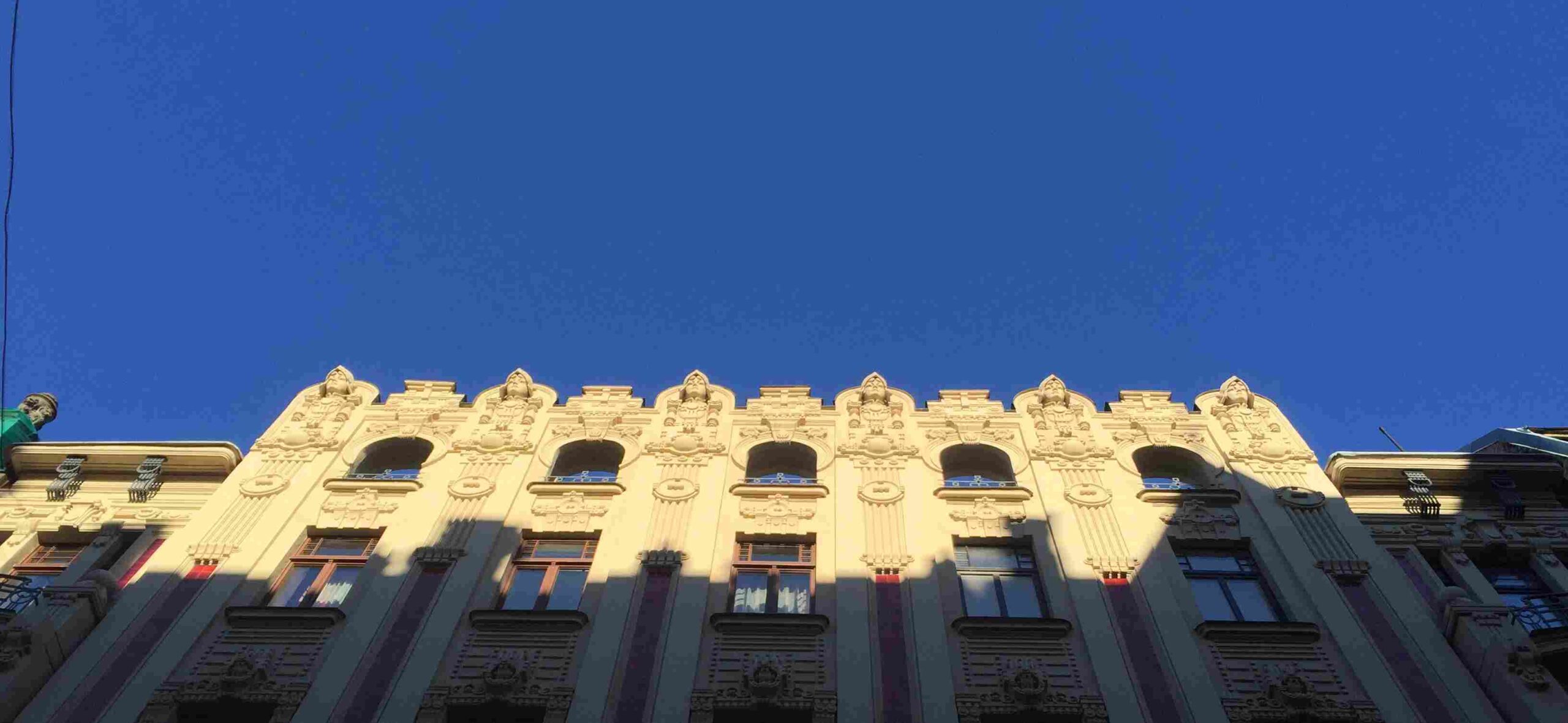
Visitors are invited to experience this “touch of Venice” and its legendary carnival traditions until March 8, 2026. The setting for this exhibition is as significant as the art itself, housed within the magnificent building at Alberta iela 12, an architectural jewel designed in 1903 by the legendary Konstantīns Pēkšēns and Eižens Laube.
As the only museum in the Baltic States dedicated to the Art Nouveau heritage, the Riga Art Nouveau Centre offers a preservation of history that mirrors the themes of Chudnovskaya’s work. The monumental facade is adorned with ornamental reliefs featuring stylized Latvian flora and fauna, themes that flow seamlessly into the interior design.
Upon entering, visitors are greeted by an impressive spiral staircase, widely regarded as one of the most magnificent masterpieces of its kind in Europe. The museum functions as a living time capsule, featuring an authentic interior of an Art Nouveau apartment where every detail captures the essence of the early 20th century.
Walking through the apartment reveals the social and private nuances of Rigan life. The sitting room, with its original blue walls and daisy motifs, was the heart of the home. The journey continues into the fireplace room, a space of warmth decorated with chestnut leaf motifs where guests once gathered by the fire.
The dining room remains the most luxurious space, distinguished by stained glass windows and two stunning still life paintings on the ceiling. In the private section, the bedroom offers a sanctuary of peace, featuring a rhythmic arrangement of stencilled rose wreaths, a motif deeply embedded in Latvian folk songs and Art Nouveau aesthetic.
The functional spaces provide a glimpse into early 20th-century modernization. The kitchen showcases innovations such as refrigerators and cast iron sinks, while the bathroom features Villeroy & Bosch floor tiles. These spaces represent the height of modern convenience for a 1903 Rigan household.
For those wishing to explore this rich cultural landscape further, detailed information about the museum can be found at https://jugendstils.riga.lv/eng/muzeum/. Beyond the museum walls, Riga remains a premier destination for lovers of this artistic movement.
To fully experience the architectural wonders, private tours, and curated experiences that this historic city has to offer, travelers are encouraged to visit https://artnouveau.club/city/riga, which serves as a comprehensive guide to the vibrant Art Nouveau legacy of the Latvian capital.