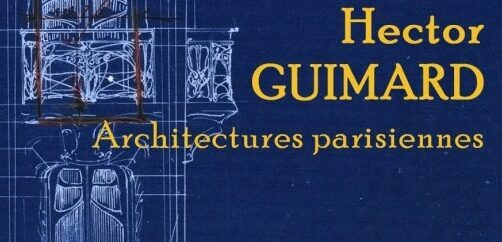
Paris, a city renowned for its iconic architecture and artistic heritage, is preparing to unveil a brand-new museum in 2027. This exciting addition to the capital’s cultural landscape will be dedicated to Hector Guimard, a French architect born in 1867, whose distinctive Art Nouveau style significantly shaped the face of Paris. While his name might not be immediately familiar to everyone, his work certainly is: Guimard is the visionary behind the famous Art Nouveau-style entrances to the Paris metro system, which have become a recognizable symbol of the city.
The new museum will be uniquely housed within the Hôtel Mezzara, a grand townhouse located at 60 Rue Jean de la Fontaine in the 16th arrondissement of Paris. This choice of location is particularly poignant, as the Hôtel Mezzara, a 1910 townhouse listed as a historic monument, was designed by Guimard himself. This means visitors will experience the architect’s work directly within one of his own creations, offering a truly immersive insight into his artistic vision.
The Hôtel Mezzara, originally built for textile industrialist and lace designer Paul Mezzara in 1910, is considered one of Guimard’s most interesting buildings. It showcases the evolution of his style, described as “mellowed and elegant,” yet still faithful to the principles he established in 1899. The mansion was acquired by the French state in 1956 and served as an annex for the Lycée Jean-Zay until it became vacant in 2015. Its large hall, illuminated by a stunning stained-glass window and featuring a surprising staircase, exemplifies Art Nouveau as a foundational modern style, transcending mere decorative revolution. The mansion was even selected as the representative building of Parisian Art Nouveau for the “The Other Pedreras” exhibition in Barcelona in 2012, which focused on great contemporary works alongside Gaudí’s Casa Mila.
Before its grand opening, the Hôtel Mezzara requires extensive restoration and renovation to prepare it for its new mission as a museum. The project is being managed by the FABELSI subsidiary Hector Guimard Diffusion and the Cercle Guimard association. Their plans involve a “complete restoration of the building,” collaborating with Art Nouveau specialists, craftsmen, restorers, and State heritage services. This includes restoring the facade to its original appearance and bringing the interior decor back to its former glory. The 6 million euro refurbishment aims to transform the mansion into a cultural venue.
Hector Guimard Diffusion is a private subsidiary of the French investment firm FABELSI, founded by entrepreneur Fabien Choné. Dedicated to preserving and promoting the work of the renowned Art Nouveau architect Hector Guimard, the company plays a central role in revitalizing public appreciation for Guimard’s legacy. Its most ambitious endeavor is the transformation of the Hôtel Mezzara—a historic mansion designed by Guimard in 1910—into a permanent museum. This initiative is backed by significant private investment and reflects a broader effort to restore the cultural prominence of one of France’s most inventive architectural minds.
Closely collaborating with Hector Guimard Diffusion is the Cercle Guimard, a non-profit association created in 2003 by scholars and enthusiasts devoted to Guimard’s work. With public interest status since 2020, the association is headquartered in Guimard’s former agency at the Castel Béranger in Paris. It leads efforts to safeguard archives, support academic research, and promote public awareness through exhibitions, tours, and publications. In partnership with Hector Guimard Diffusion, the Cercle provides the scholarly and cultural foundation for the planned museum, ensuring that the project serves not just as a tribute to Guimard’s artistic achievements, but also as a dynamic space for education and historical preservation.
The permanent museum will delve into the French architect, his body of work, and his lasting influence, while also exploring the broader Art Nouveau movement and its significance in France and Paris during the Belle Époque. The museum’s collections are set to feature a variety of items that narrate Guimard’s artistic journey, including decorative objects, furniture, archival documents, and other works. Notably, the subway entrances designed by Hector Guimard will be a prominent feature of the museum’s tour, offering visitors a deeper understanding of these iconic Parisian elements. The operators also aim to create immersive experiences that transport visitors into the world of Art Nouveau and Belle Époque Paris.
The establishment of this museum is seen by its organizers, such as Nicolas Horiot, president of Le Cercle Guimard, as “repairing an injustice” done to Guimard. Despite the international recognition of his metro entrances as “marvellous symbols of the Belle Époque,” Guimard’s work faced significant opposition and criticism within France. Parisians, for instance, derided his metro entrances as “spaghetti style”. Critics even deemed the green paint “un-French” and the cursive lettering “stupefying to foreigners”. In the post-war era, many of his creations were unfortunately destroyed, considered to have no historic or artistic value amidst the wave of modernism. Of the 167 metro entrances Guimard designed, only 88 remain today. The approval for this museum project itself was the culmination of a decade-long struggle with Parisian authorities to secure long-overdue recognition for Guimard’s art.
Le Cercle Guimard envisions this museum as a “living testimony to the architect of the Paris underground” and a crucial link between French and European Art Nouveau movements, invigorating Paris’s Belle Époque heritage1319. They are actively seeking support from institutions and Art Nouveau enthusiasts to realize this ambitious project.
This new museum promises to be a worthy and insightful addition to Paris’s vibrant cultural landscape, finally giving Hector Guimard and the Art Nouveau movement the comprehensive recognition they deserve.
Paris to finally honor art nouveau master
A long-overdue tribute is finally on the horizon in Paris. A new museum will be dedicated to Hector Guimard, one of Art Nouveau’s most brilliant yet historically overlooked pioneers. Best known for the iconic entrances to the Paris Métro, Guimard’s work became a defining symbol of the city and the Art Nouveau movement itself.
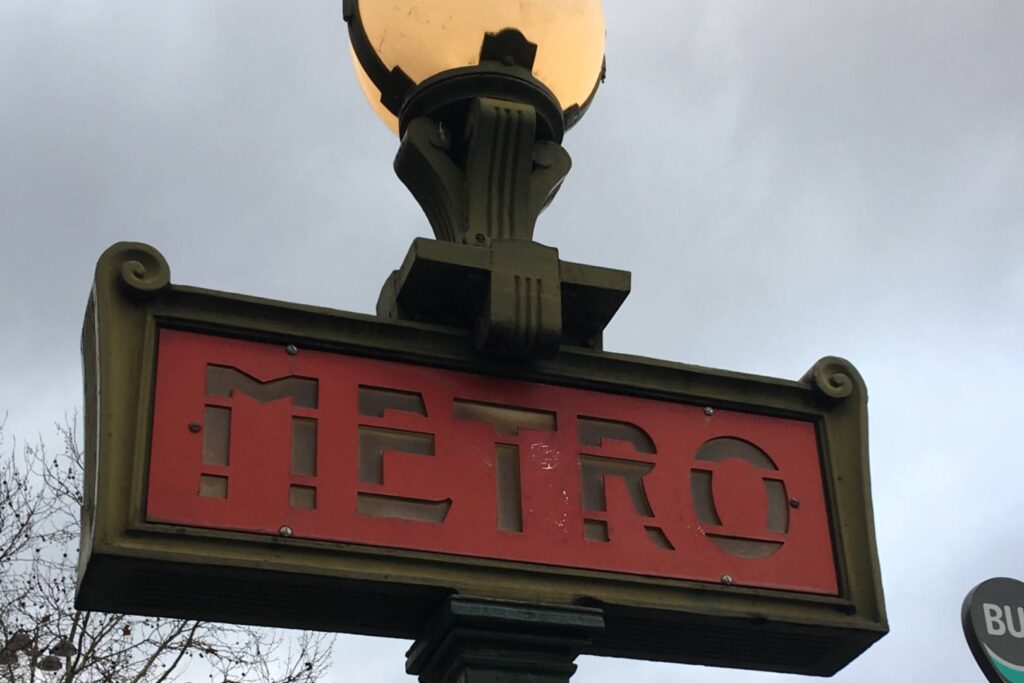
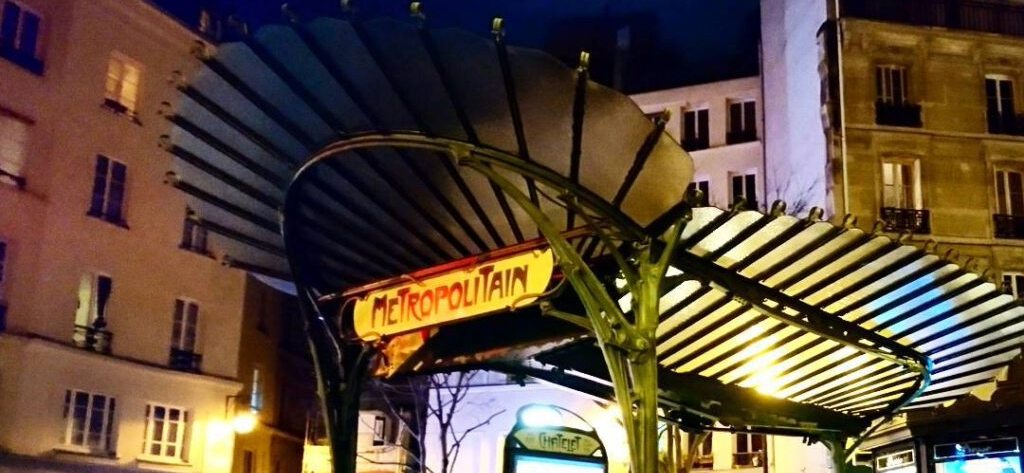
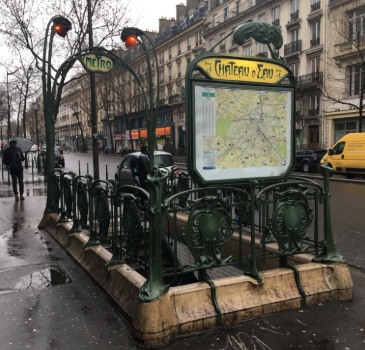
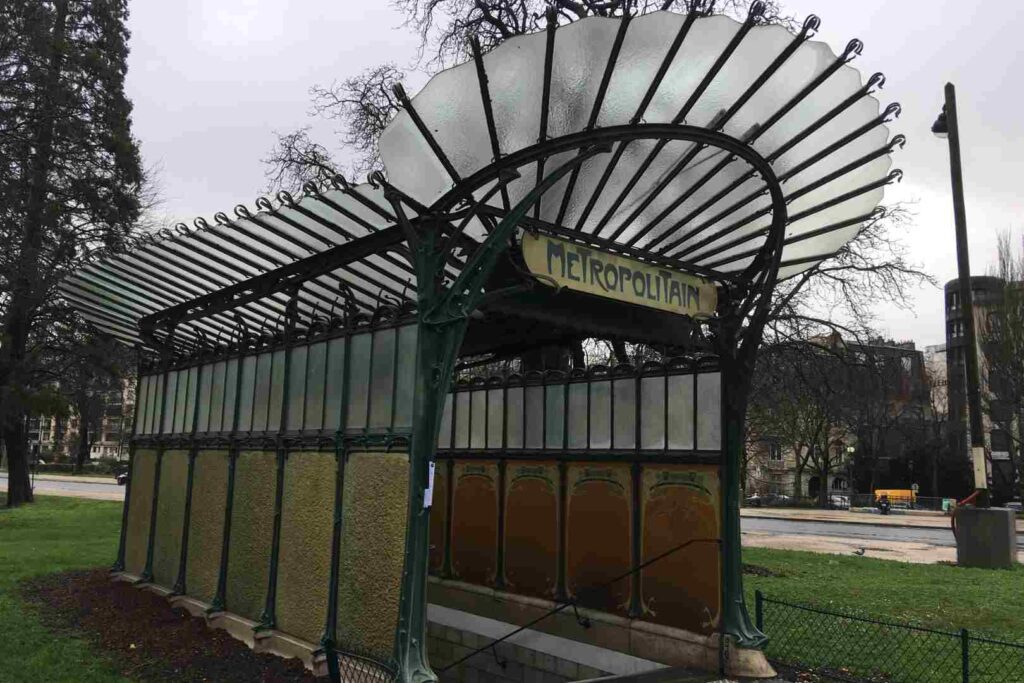
Between 1900 and 1912, Guimard designed 167 of these entrances, characterized by their stylized lettering and elegant, green ironwork that mimics natural forms like insect wings and orchid stems. While one was famously donated to the Museum of Modern Art in New York, a tragic wave of “modernization” in the mid-20th century led to the destruction of nearly half of them. Despite this, the remaining structures are not just functional entrances; they are tourist attractions in their own right, a powerful testament to the unbridled creativity of their designer.
Private tours in Paris
To truly immerse yourself in the artistic heart of Paris, there is no better way than embarking on a private Guimard and Lavirotte Art Nouveau tour. This exclusive experience, offered by Art Nouveau Club, invites you to explore the masterpieces of two of the most influential architects of the Art Nouveau movement. With a personal guide leading you through Paris’s most iconic Art Nouveau landmarks, including Hector Guimard’s striking Métro entrances and Alexandre Lavirotte’s intricate facades, you’ll gain a deep understanding of the movement’s impact on the city’s architectural landscape. This curated tour is not just about sightseeing—it’s an opportunity to step back in time, engage with Paris’s cultural history, and experience the art and design that continue to shape the city’s identity. Whether you’re an architecture enthusiast, an art lover, or simply seeking a unique Parisian experience, this private tour is an unforgettable way to explore the intersection of history, art, and urban beauty. Don’t miss the chance to discover the enchanting world of Art Nouveau in Paris with Art Nouveau Club.
You can explore more about these private Art Nouveau tours and request further information or bookings by visiting Art Nouveau Club’s Paris page. This ensures that your tour is tailored specifically to your interests, whether you’re seeking an intimate, curated experience or a broader exploration of Paris’s architectural jewels.
Bon voyage!
TOP 8 ART NOUVEAU SIGHTS IN PARIS
Paris is full of architectural treats, but for me, there is one style that stands out: Art Nouveau. I love its elegance, the long flowing lines, and the delicate motifs often hidden in the design. It is pure romance in stone and iron. While many people walk right past them, Paris is home to some truly wonderful examples—if you know where to look.
The 16th arrondissement is the beating heart of the movement, home to the masterpieces of Hector Guimard. However, the style’s influence is scattered throughout the city, from the flamboyant façades of the 7th arrondissement to the “Bouillon” restaurants that serve as the epitome of Belle Époque design.
To help you find these architectural gems, I’ve broken down eight of the most stunning examples by arrondissement.
1st Arrondissement
1. La Samaritaine
In 1870, Ernest Cognacq and his wife Marie-Louise Jaÿ opened a modest shop near the Pont Neuf. By the 1890s, architect Frantz Jourdain transformed it into an Art Nouveau icon. He utilized a modern iron frame to flood the interior with light, decorating the exterior with vibrant floral ceramic panels and a sweeping glass roof. High above the main staircase, colorful frescoes painted by Jourdain’s son still capture the imagination, even alongside the store’s later Art Deco additions.
7th Arrondissement
2. The Lavirotte Building (29 Avenue Rapp)
If Art Nouveau ever decided to throw a party, it would look like this façade. Designed by Jules Lavirotte in 1901, this apartment building is a masterpiece of excess. It features a riot of sculpted stone, twisting iron, and glazed ceramics by the legendary Alexandre Bigot. The doorway is particularly famous—you could spend thirty minutes studying its intricate carvings and still discover new details.
3. 12 Rue Sédillot
Built in 1899, this was Lavirotte’s “practice run” before his flamboyant work on Avenue Rapp. This private residence is more restrained but carries all his hallmarks: flowing stonework, ornamental iron, and playfulness. It’s a perfect example of how the style could be made fashionable yet livable for the Parisian elite.
4. 3 Square Rapp
Tucked away in a quiet square, this building served as Jules Lavirotte’s own home and studio. Completed in 1899, it is a sophisticated corner building featuring curved balconies and subtle ceramic details. It offers a sense of movement and grace without the theatricality of his more famous works nearby.
15th Arrondissement
5. 24 Place Étienne Pernet
Architect Alfred Wagon brought a burst of energy to the 15th arrondissement with this 1905 apartment block. The façade is a literal stone garden, covered in sculpted vegetation, oversized flowers, and vines that seem to climb the building. It is theatrical and organic, turning a standard residential square into an outdoor gallery.
16th Arrondissement
6. Castel Béranger (14 Rue de la Fontaine)
This is the building that put Hector Guimard on the map. Completed in 1898, it was his first major commission and served as a manifesto for the Art Nouveau movement. From the rippling stonework to the turquoise-tinted wrought iron gates, every inch—down to the door handles—was designed by Guimard to be a cohesive work of art.
7. Hôtel Guimard & Hôtel Mezzara
Guimard’s later works show the evolution of the style. Hôtel Guimard (122 Avenue Mozart) was his own residence, featuring a more refined, pale stone façade with elegant, flowing curves. Nearby, Hôtel Mezzara (60 Rue de la Fontaine), built for a textile manufacturer, showcases a softer integration of glass and stone, proving that Art Nouveau could be as subtle as it was bold.
City-Wide
8. The Art Nouveau Métro Entrances
Perhaps the most famous examples of Art Nouveau in the world, Hector Guimard’s Métro entrances are as iconic to Paris as the Eiffel Tower. Using cast iron to mimic organic plant forms, Guimard turned the city’s transit system into a “living” forest. Look for the “dragonfly” glass canopies or the distinctive amber lamps that still glow across the city today.