From November 10, 2026, to April 25, 2027, the Petit Palais will turn its attention to Brussels at the dawn of the 20th century, bringing together more than 250 works to explore one of Europe’s most fascinating artistic laboratories.
At the turn of the century, Brussels was undergoing a remarkable cultural transformation. Painting, sculpture, architecture, furniture, jewelry, photography and graphic design were no longer developing in isolation. Artists and designers were increasingly interested in creating a complete environment — an idea that would become one of the defining characteristics of Art Nouveau.
That extraordinary moment is the subject of “Bruxelles 1900,” a major exhibition at Paris’s Petit Palais. Running from November 10, 2026, through April 25, 2027, the exhibition brings together paintings, sculptures, decorative arts, posters, jewelry, photographs, architectural designs and graphic works to reconstruct the creative energy of the Belgian capital around 1900.
When Brussels became a European artistic capital
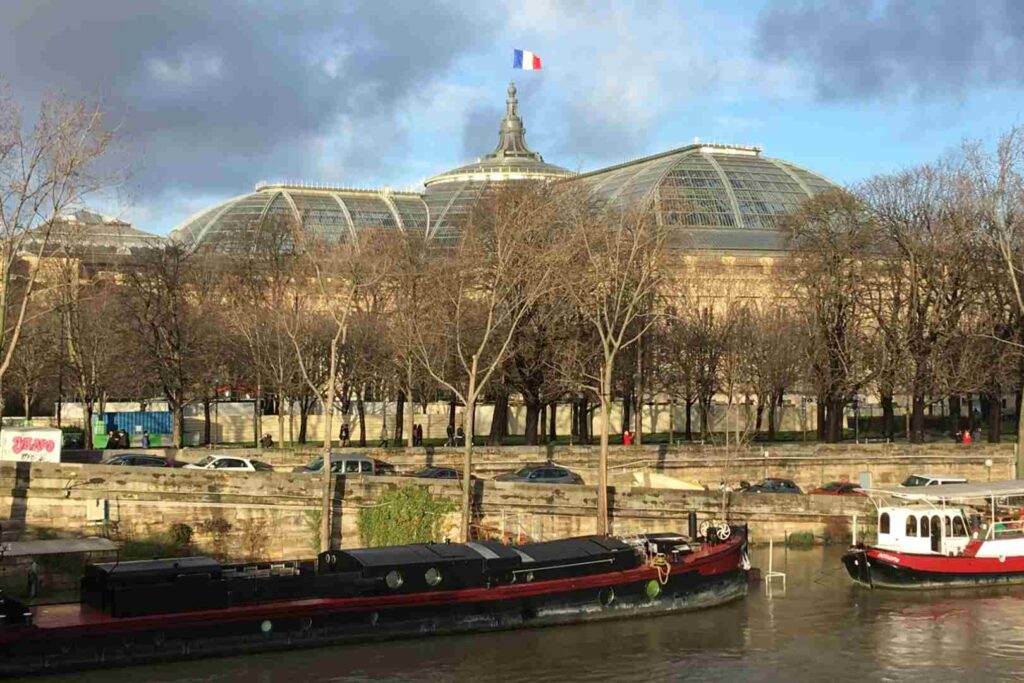
The story of the exhibition goes back to the 1900 Paris Universal Exhibition. At the newly inaugurated Grand Palais, visitors encountered a Belgian section featuring almost 150 paintings and sculptures. The response was remarkably enthusiastic, helping establish Brussels as one of the major artistic centres of Europe at the crossroads of the 19th and 20th centuries.
But “Bruxelles 1900” is not simply a celebration of one artistic style. The exhibition looks at a much broader cultural ecosystem in which Symbolism, Naturalism, social art, Idealism and Art Nouveau could exist alongside one another.
Brussels had become a place where artists, writers and critics could experiment with new ideas. From the 1880s onward, artistic circles such as La Libre Esthétique helped create an international environment in which Belgian artists could engage with developments elsewhere in Europe.
The result was an unusually fertile scene: a city where artists were questioning traditional distinctions between fine art and applied art, and where architecture, interiors and everyday objects could become part of a unified artistic vision.
More than an Art Nouveau exhibition
Art Nouveau will naturally be one of the exhibition’s major attractions, but the show goes well beyond the familiar curves, floral motifs and ornamental designs associated with the movement.
The Petit Palais brings together painting, sculpture, architecture, photography, jewelry, decorative arts, fashion and graphic art, allowing visitors to see how closely these disciplines were connected in Brussels.
Architecture and interior design are particularly important to this story. Figures such as Victor Horta and Henry van de Velde helped redefine the relationship between buildings, furniture and decoration. Their work embodied the idea that modern art could extend into every aspect of daily life. The exhibition includes furniture ensembles and architectural models that demonstrate this ambition.
Jewelry provides another glimpse into this philosophy. The work of Philippe Wolfers, for example, shows how precious objects could become highly expressive works of art rather than simply symbols of wealth and status.
Posters and graphic works reveal another side of the same cultural revolution. They show how this new visual language moved beyond galleries and private interiors and into the public spaces of the city.
From Symbolist dreams to modern life
Some of the exhibition’s most striking works belong to the Symbolist tradition, an artistic movement fascinated by dreams, mythology, spirituality, psychological states and ambiguous imagery.
Among the works highlighted by the Petit Palais is Fernand Khnopff’s Des Caresses (The Caresses), painted in 1896. The work, from the Royal Museums of Fine Arts of Belgium, has become one of the defining images associated with Belgian Symbolism.
Another important work is Jean Delville’s L’Amour des âmes, a large Symbolist painting dating from 1900. The work is particularly relevant to the exhibition because it was itself presented at the Paris Universal Exhibition of 1900.
The exhibition also highlights monumental works by artists including Léon Frédéric, whose large-scale compositions demonstrate the diversity of Belgian art at the time.
Together, these works reveal a Brussels that was not simply embracing decorative fashion. Artists were using new visual languages to address questions about spirituality, society, identity, modernity and the changing experience of urban life.
A meeting point between art and everyday life
Perhaps the most interesting aspect of “Bruxelles 1900” is the way it refuses to separate “high art” from design.
A painting can be considered alongside a piece of jewelry. An architectural model can be viewed next to a piece of furniture. A poster can sit within the same cultural story as a sculpture.
That approach reflects the ambitions of the period itself. The artists associated with Brussels’ avant-garde were increasingly interested in the idea of Gesamtkunstwerk — a total work of art, in which architecture, interiors, furniture and decoration could form a coherent whole.
This helps explain why the exhibition includes such a wide range of objects. Rather than presenting Art Nouveau as an isolated style, the Petit Palais uses it as part of a larger story about the transformation of artistic culture at the beginning of the modern era.
Major loans from Belgian collections
The exhibition has been organized in partnership with three major Belgian institutions: the Royal Museums of Fine Arts of Belgium, the Royal Museums of Art and History, and the Royal Library of Belgium (KBR). Their exceptional loans allow the Paris exhibition to assemble a broad picture of Brussels’ artistic scene.
This international collaboration is particularly appropriate given the subject. Brussels’ artistic influence was never confined to Belgium. Its artists and designers were participating in a wider European conversation that connected the Belgian capital with Paris and other major cultural centres.
The exhibition therefore presents Brussels not as a peripheral participant in European modernism, but as one of the places where modern artistic ideas were actively being invented, tested and circulated.
The Petit Palais returns to the world of 1900
There is also a striking historical coincidence behind the exhibition.
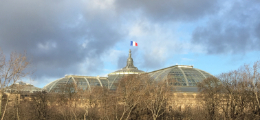
The Petit Palais itself was built for the 1900 Universal Exhibition. More than 125 years later, the museum is therefore presenting an exhibition about a city and an artistic moment that existed at precisely the time its own building was created.
That makes the setting particularly evocative. Visitors will encounter the art of Brussels 1900 inside a Parisian monument that was itself part of the same extraordinary moment of optimism, experimentation and international cultural exchange.
A portrait of Brussels at the dawn of modernity
Ultimately, “Bruxelles 1900” is about more than Art Nouveau.
It is a portrait of a young European capital experiencing an extraordinary cultural acceleration. Economic growth, new artistic movements and international exchanges created an environment in which painters, sculptors, architects, designers, jewelers, photographers and graphic artists could challenge established boundaries.
The exhibition also places this artistic flourishing within the more complicated political and social realities of the period. The reign of Leopold II, including Belgium’s colonial enterprise in the Congo, forms part of the historical context and reminds visitors that the optimism and creativity of the era existed alongside profound contradictions.
By bringing together more than 250 works across so many disciplines, the Petit Palais offers an opportunity to rediscover Brussels as one of the great laboratories of European modernity.
“Bruxelles 1900” will be presented at the Petit Palais from November 10, 2026, to April 25, 2027.
Read the article Art Nouveau in Paris: A Legacy of Elegance and Innovation